 Gatgooun
Home late and hungry? Three quick Korean dinners from the brands' own recipes
Published Oct 31, 2026 · Gatgooun
Written with AI assistance and reviewed by the Gatgooun editor. We have not cooked these dishes ourselves; times and steps are the brands' own.
This article contains affiliate links. As an Amazon Associate I earn from qualifying purchases.
 © Samyang Foods / Buldak US recipe blog
It's late, you're hungry, and you have about ten minutes of energy left. This guide collects three quick Korean dinners from the brands' own recipe pages, so you can decide what to keep in the cupboard: Shin Ramyun with a spoon of gochujang, Shin Ramyun cooked in a frying pan with cheese and egg, and a Buldak beef and broccoli stir-fry.
We read every recipe on the brand's site on October 30, 2026. We haven't cooked them ourselves, so the times below are the brands' numbers, not ours. We don't list prices and we don't promise how anything will taste.
Quick picks
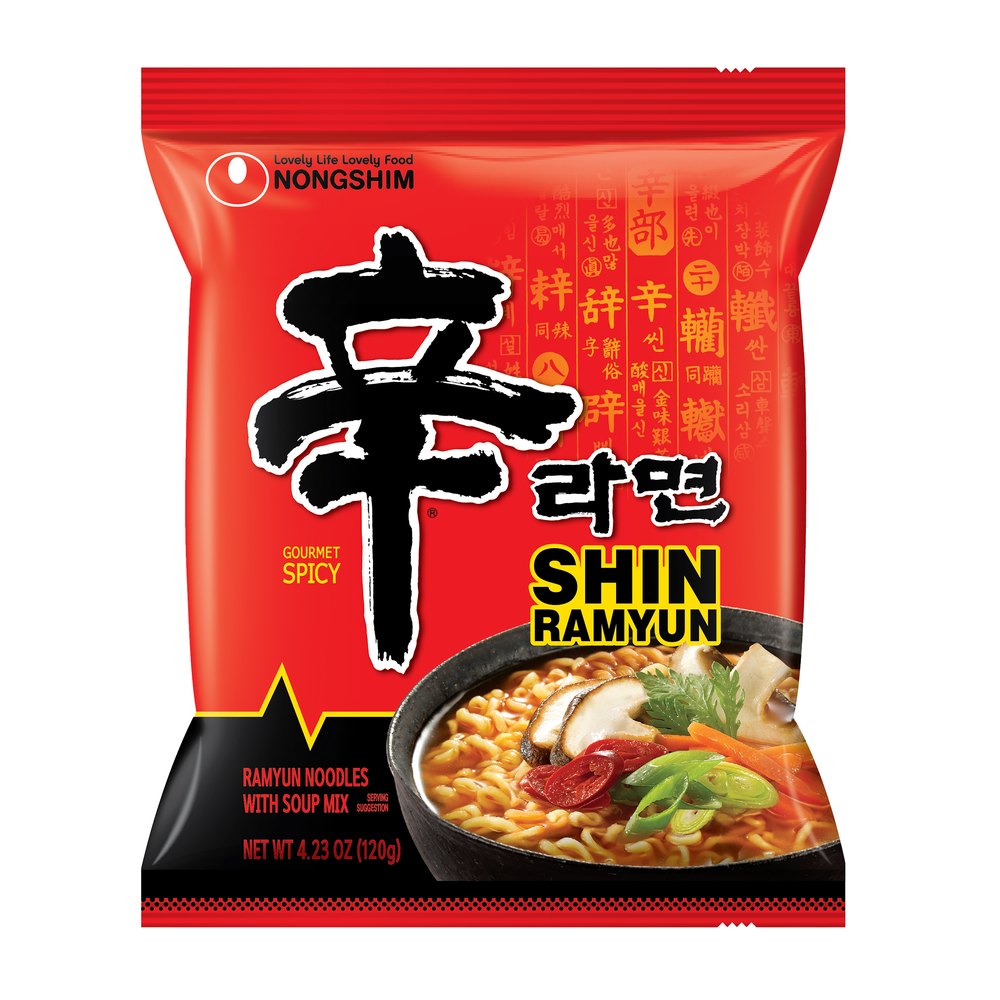
- Want the base for both ramyun recipes below → Nongshim Shin Ramyun Noodles (4.23 oz, pack of 20)Amazon ↗Affiliate
link - Want a tub of gochujang for the 5-minute ramyun upgrade → CJ Haechandle Gochujang Hot Pepper Paste (500 g)Amazon ↗Affiliate
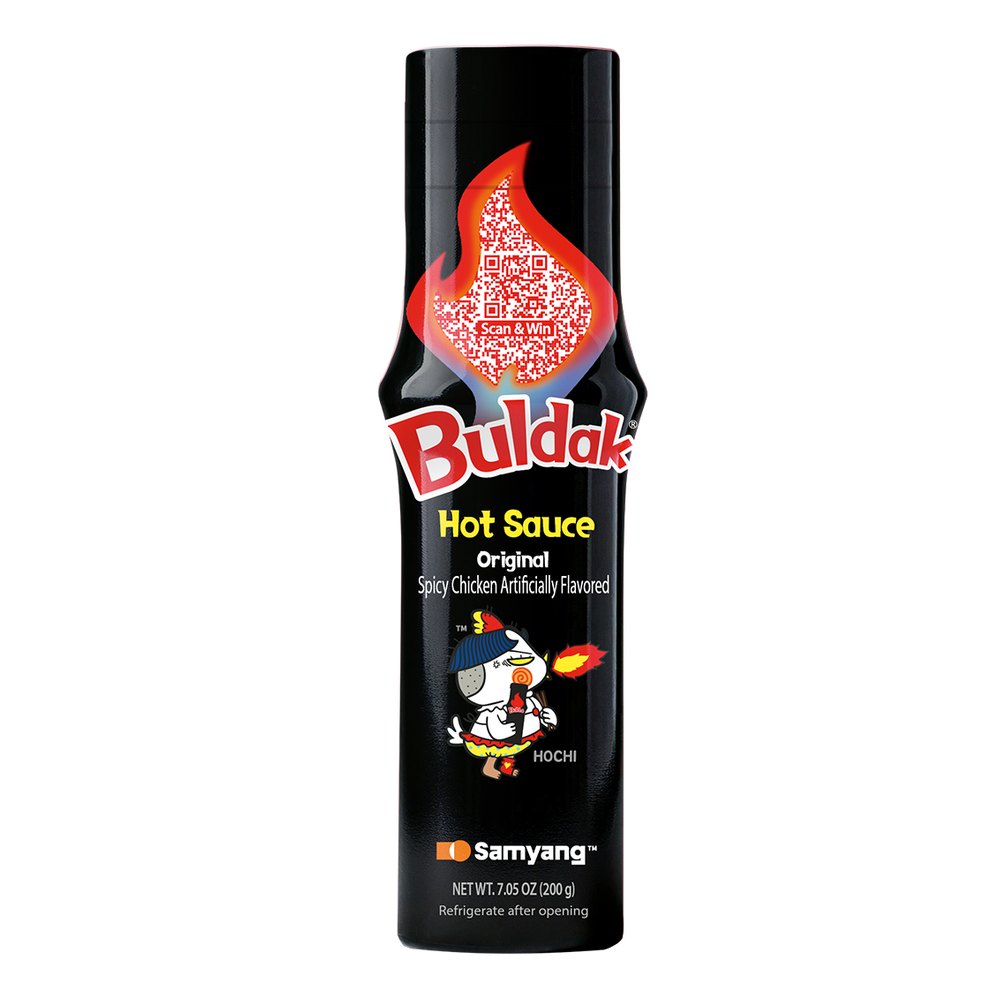
link - Want the sauce for the beef and broccoli stir-fry → Samyang Buldak Original Hot Chicken Sauce (7.05 oz, 2-pack)Amazon ↗Affiliate
link
As an Amazon Associate I earn from qualifying purchases.
The three dinners at a glance
Two of the recipes come from Nongshim's Shin Ramyun site for Australia, and one comes from Buldak's US site, run by Samyang. Both Nongshim recipes start from one pack of Shin Ramyun. The Buldak recipe uses the bottled sauce, not the instant noodles.
One thing to know before you start: the Nongshim recipes are written for the Australian site. The gochujang recipe says to cook the noodles the way the packet says, so use the directions printed on the US pack you actually have. The frying pan recipe gives its own water and timing instead.
| Dinner | Brand's time | From the cupboard | From the fridge |
|---|---|---|---|
| Gochujang ramyun | 4-5 min cooking time | 1 pack Shin Ramyun, ½ tbsp gochujang | Nothing |
| Frying pan ramyun | 10 min cooking time | 1 pack Shin Ramyun | 1 slice cheese, 1 egg, 1 spring onion |
| Buldak beef and broccoli | Under 15 min (the guide's claim for each dinner) | 2 tbsp Buldak sauce, 1 tbsp oyster sauce, oil, sesame seeds | About 150 g thin-sliced beef, ½ head broccoli |
Gochujang ramyun: the five-minute upgrade
This is the shortest recipe here: Nongshim lists a cooking time of 4 to 5 minutes for one person and only two ingredients. You cook the noodles as the packet says, stir in half a tablespoon of gochujang while they cook, and add a little more on top when you serve if you want it spicier.
Nongshim describes gochujang as a fermented red chili paste that's both sweet and spicy, and says a chili sauce such as sriracha works if you don't have any. The brand's photo for this recipe also shows egg, ground meat and vegetables, which aren't in its ingredient list, so think of those as optional extras.
The recipe doesn't name a gochujang brand. We link CJ Haechandle Gochujang because it's a 500 g tub from a Korean maker, and a half-tablespoon at a time goes a long way.
Frying pan ramyun: one pan, cheese and egg
Nongshim's frying pan version has less soup, and the brand says you can eat it straight from the pan, which means less washing up. It lists 10 minutes for one person.
The steps, in short: bring 350 ml of water to a boil in a frying pan; add the noodles, the vegetable packet and half of the soup base, and cook for about 3 minutes; lay a slice of cheese in the middle and let it melt for 30 seconds; crack an egg into the center, cover and simmer for about a minute; then take it off the heat and top with chopped spring onion.
Two notes from reading the recipe. It uses only half of the soup base, so you'll have the rest left over. And it doesn't say how firm the egg should be. Our note, not Nongshim's: the FDA advises cooking eggs until both the yolk and the white are firm, so give it longer under the lid if it isn't set after a minute. Both ramyun dinners start from Shin Ramyun; the 20-pack on Amazon covers a lot of weeknights.
Buldak beef and broccoli: a stir-fry without noodles
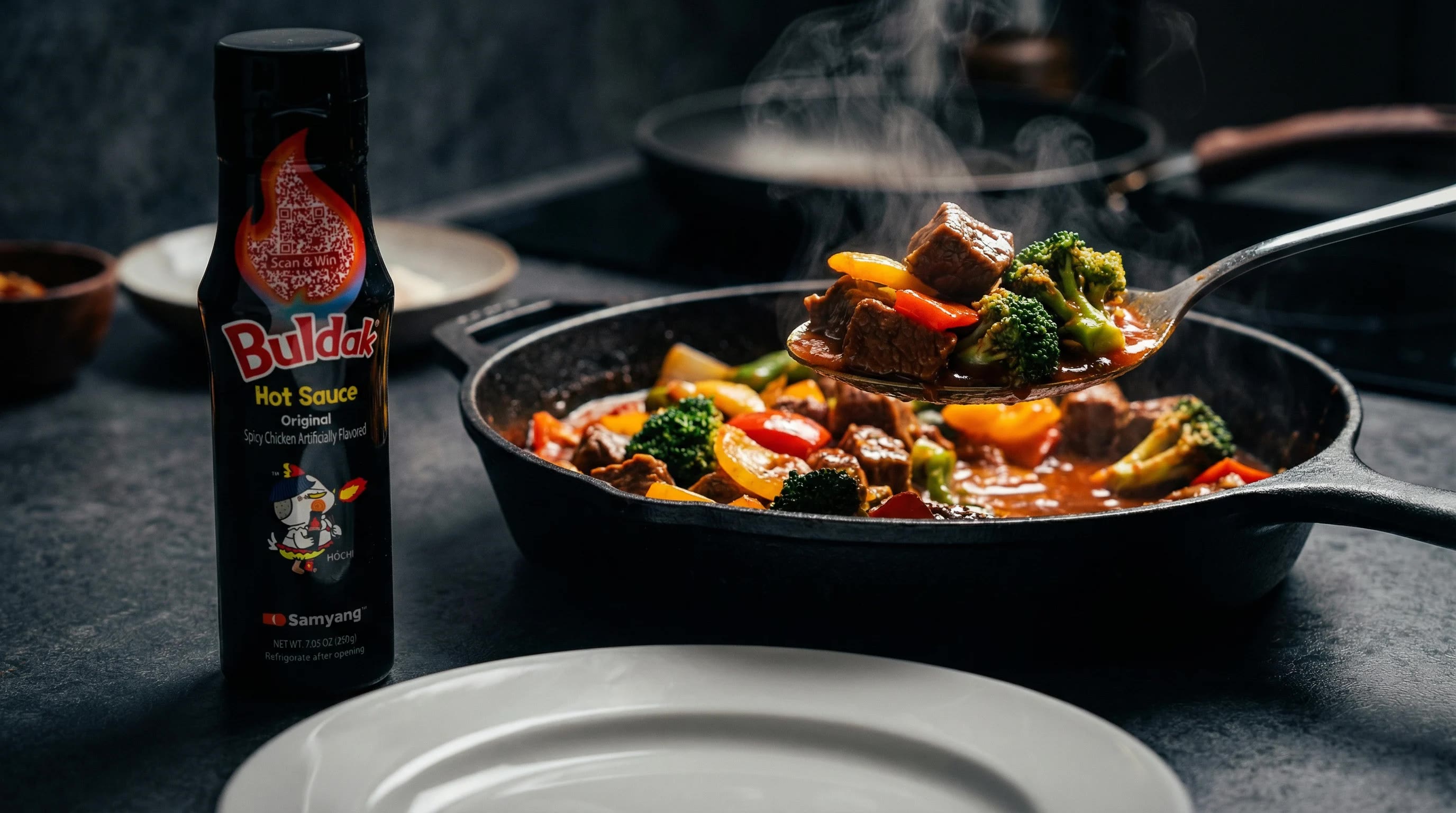
Buldak's US blog published five one-pan dinners on March 9, 2026, and presents each of them as taking under 15 minutes; it gives no separate timing for this recipe. This one is the beef and broccoli stir-fry, shown in the photo at the top (the peppers in that styled photo are not in the ingredient list).
You heat oil in a pan on high and cook about 150 g of thin-sliced beef (any cut) until it changes color, add half a head of broccoli florets, then stir in 2 tablespoons of Buldak sauce and 1 tablespoon of oyster sauce until everything is coated. Sesame seeds go on at the end. The recipe doesn't give amounts for the oil or sesame, and it doesn't say how to tell when the beef is done. Our note, not Buldak's: the FDA says color and texture are unreliable signs that meat is safely cooked and that a food thermometer is the only sure check. It lists 145°F with a 3-minute rest for beef steaks and roasts, so check thin-sliced beef with a thermometer too rather than going by its color.
The bottle in Buldak's photo is the Original Hot Sauce in a 7.05 oz bottle, the same flavor and size as the Buldak Original Hot Chicken Sauce 2-pack we link. Buldak is known for heat, so if you're not sure, start with less than 2 tablespoons and add more.
What to keep in the cupboard
If you want all three dinners available on a tired night, the shelf-stable part is short: a stack of Shin Ramyun, a tub of gochujang and a bottle of Buldak sauce. The fresh part is an egg, a slice of cheese, a spring onion, some thin-sliced beef and a head of broccoli.
Check the storage directions on the gochujang tub and the sauce bottle you receive. The bottle in Buldak's own photo is labeled to refrigerate after opening.